Napoleonic, WSS & ECW wargaming, with a load of old Hooptedoodle on this & that


Tuesday, 12 March 2013

More Old Houses


Last night I moved on to a couple of the half-timbered buildings, which require some new techniques, and learned quite a lot. In my boyhood, I had a sad experience with the old Airfix OO inn, and was scarred by it. I now realise that I tried too hard - you can't paint everything that's there, and if you do manage to succeed it will just look like a model of a house, rather than a house. [With the greatest of respect, Airfix kits never looked like real houses anyway.]

In fact, painting the Hovels buildings is a delight, because the sculptor has made such a nice job of them that all you have to do is identify what is there, and let it emerge by itself - the rougher the dry-brushing the more building-like will be the results. The half-timbered houses appear to come in two types - one is the expected finish, with the gaps between the beams plastered, and the other has the gaps filled with wicker, or maybe it is wattle-without-the-daub, choose your nomenclature.

The biggest act of faith is finishing off the whole building with the driest of dry brushings of a Dulux shade called "Khaki Mists 3" (which is not exactly poetic, you marketing people), to make it look dirty - to stop it looking like a kid's drawing of a newly built house on a Pergamon estate. Or so I imagine, in my apprenticeship - the act of faith is trusting that the brush is dry enough - too much paint and I am basically going to have to start all over again. An experienced eye might check what I've done and chuckle, "oh no - not the Khaki Mist 3 overbrush..."

Anyway - excellent entertainment for a snowy evening. While painting some terracotta pantile roofs, I was reminded that such tiles are very common in rural areas around here in East Lothian. A visitor once commented to me that some of the old cottages here have a surprisingly Mediterranean look for the Frozen North, and the answer is exactly straightforward - the roof-tiles are Mediterranean, and traditionally so. When the ships carrying coal from the mines of East Lothian used to deliver to Spain and Portugal (and we are talking sailing ships here), they would fill up with the local roof-tiles to ballast them for the return voyage - there was always a steady market for them. Which - in turn - reminds me that when we got our house extension built in 2005 we roofed it with Spanish slate, which seems a pleasing continuation of an old tradition, but in reality was mostly because we couldn't afford Welsh slate, and the council planners gave us a choice of only the two.

Garvald, East Lothian, with roof tiles in evidence
As a silly background task, I am mentally collecting suitable place names for the ECW. My intention is to focus on an area (probably largely mythical) around Lancashire and Lonsdale - though you might struggle to find this area exactly on a historical map. I am very taken with The Perfect Captain's (free download) Battlefinder system, which uses map cards to create battlefields and campaign terrain. I intend to make use of this in my forthcoming efforts, but the names of the places - though excellent - are not quite right for the gruff North. I thought it would be amusing to tweak a personal set of the Battlefinder cards to use more suitable names - it would also individualise the game a bit, which is usually worth the effort.

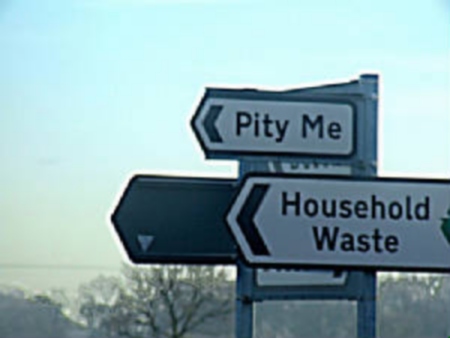
Thus I hope to have a bit less of the Pumphet Mauleverer and Castle Mauvoisin (I may have made these up) and a bit more Clagthwaite and similar. I love the whole subject of placenames, wherever they are. The North of England has some great names - I think Northumberland and Durham may have the best of the lot. Among so many, my personal favourites include Wide Open, near Newcastle, and the wonderful Pity Me, in County Durham. Long ago, I had reason to write to someone who lived at Hag House Farm, Pity Me, and I still treasure that address as a classic. If you happen to live there, no offence is intended at all, but it conjures up images which would not fit with the more comfortable Home Counties.


Since I am now rambling, I shall close.  

Monday, 11 March 2013

Infrastructure

Back numbers - a pile of old number labels which have been removed and replaced
Messing around, more like. I got the revised unit numbers all worked out, swapped all the labels over, and am now left with the task of typing up list amendments. I have produced an accurate conversion table, so with a bit of luck I'm hoping to write a little program to use this table to amend the file-names of all my photograph library to match the new numbers.

I realise this is likely to end in tears, so have carefully produced a copy folder to play around with. I'll do this next bit when I've thought about it, and when I'm more awake, tomorrow.

I've also started on painting some 17th Century buildings. There are a lot of these, so I've started with what look like easy ones - I've left the half-timbered stuff until I've got my eye in and my confidence up with the dry-brushing. Good fun so far. These are all Hovels 15mm. I like painting houses, because it's quick and low-stress.


I'd like to be able to claim that the poor lighting didn't show off my house
painting to advantage, but it would be a lie
 
Thanks to Xavier, who emailed me to point out that the numeric labels on my unit sabots are not actually Blick labels, they are Avery labels. He's correct, of course. I used to use Blick labels of this type, but they are not made now, so I use Avery. The Avery labels are fine, apart from the fact that the adhesive is not so good, and for some reason the set contains a typo - the number 110 does not appear, a duplicate number 100 being printed instead. Probably makes them more valuable. I have a couple of old Blick 110s which have been carefully re-glued a few times.

Best solution is just to withhold number 110...

Friday, 8 March 2013

Here Be Dragons - Pitfalls of Planning


The 20eme Dragons, in fact. I'm pleased with these - a chance purchase on eBay, they arrived in good shape. The original paint job was really very good, though the passage of time and a few "improvements" had had an effect.

I got them cleaned up, retouched, based and in the cupboard very quickly - I only received them yesterday afternoon, and I finished them off this morning. Here they are, then, all looking eyes-right and with their carousel horses dancing in step - the best and silliest aspects of Old School in a single picture. They also gave me cause to wonder about a few things...

(1) Since I had already decided that I had more than enough units of French dragoons - in fact I had even sold off and otherwise disposed of a good many such figures already - I am not clear just why I needed these. It may be something about the sight of painted soldiers on eBay.

(2) Further to (1), how is it that a rogue arrival like these chaps can completely leapfrog the existing painting queue and make a mockery of any pretence of planning or prioritisation? Though I guess it is a hobby, after all.

(3) Most serious of the lot, my in-house unit numbering system has now failed. This is the first unit to which I cannot allocate a new number - I've run out of numbers. The end of the French army has just collided with the start of the Spanish. This may not sound serious, but the organisation of the cupboards, the catalogue, the picture library, and even my in-house computerised wargame all rely on these numbers. So, for the third time I can remember, the most recent being some four years ago, I shall have to re-do the numbering. Apart from the admin and the re-naming of the computer records and retyping the spreadsheets, this will require me to replace the little Blick number labels on a great many (probably most) unit sabots for the Peninsular War armies.

My intention is to allocate numbers 1-200 to the French and their allies, 201-400 to the British-Portuguese and their allies, and 401-500 to the Spanish. That should all be OK, leaving a good bit of headroom, and the next bit of head-scratching concerns how to arrange the numbers within these blocks. A man with an IT background like mine can see that certain arrangements are more capable of surviving organisational change and new arrivals than others, but the tabletop fighter in me sees that the most convenient way to address this is to number the units consecutively within the higher army organisation, so that the battalions within the regiments within the brigades within a division, plus their skirmishers and attached artillery, form a single number series which sit next to each other in The Cupboard. At set-up time, and during tidy-up (which is much more of a chore), there are few conveniences to match just moving a contiguous section of a shelf onto the table (and back).

It does mean that any re-organisation or insertion of additional units can cause a bit of hassle, but there's not so much of that these days. Apart from when new, unplanned units like the 20e Dragons arrive in the post.

Changing the numbers is actually rather fun - it does come, admittedly, from the same group of hobby jobs as re-basing, but involves nowhere near the same level of pain. However, because it is quite a pleasant job, it is likely to jump the entire queue of hobby tasks I have in mind - in the same way that the fitting of magnetic sheet to subunit bases and sabots did last year (or was it the year before?). That particular interruption formed a dangerous precedent, because I have been delighted with the results, and it does offer a case in support of changing my mind about things. This really does not help the concept of The Grand Plan at all.

On the subject of getting things done in the right order, I am pleased to present the thoughts of one of my favourite popular philosophers, AA Milne. I think there are familiar echoes in much of this.


The Old Sailor 


There was once an old sailor my grandfather knew 
Who had so many things which he wanted to do 
That, whenever he thought it was time to begin, 
He couldn’t because of the state he was in. 

He was shipwrecked, and lived on an island for weeks, 
And he wanted a hat, and he wanted some breeks; 
And he wanted some nets, or a line and some hooks 
For the turtles and things which you read of in books. 

And, thinking of this, he remembered a thing
Which he wanted (for water) and that was a spring;
And he thought that to talk to he’d look for, and keep
(If he found it) a goat, or some chickens and sheep.

Then, because of the weather, he wanted a hut
With a door (to come in by) which opened and shut
(With a jerk, which was useful if snakes were about),
And a very strong lock to keep savages out.

He began on the fish-hooks, and when he’d begun 
He decided he couldn’t because of the sun. 
So he knew what he ought to begin with, and that 
Was to find, or to make, a large sun-stopping hat. 

He was making the hat with some leaves from a tree, 
When he thought, “I’m as hot as a body can be, 
And I’ve nothing to take for my terrible thirst; 
So I’ll look for a spring, and I’ll look for it first.” 

Then he thought as he started, “Oh, dear and oh, dear!
I’ll be lonely tomorrow with nobody here!”
So he made in his note-book a couple of notes:
“I must first find some chickens” and “No, I mean goats.”

He had just seen a goat (which he knew by the shape)
When he thought, “But I must have a boat for escape.
But a boat means a sail, which means needles and thread;
So I’d better sit down and make needles instead.”

He began on a needle, but thought as he worked,
That, if this was an island where savages lurked,
Sitting safe in his hut he’d have nothing to fear,
Whereas now they might suddenly breathe in his ear!

So he thought of his hut … and he thought of his boat, 
And his hat and his breeks, and his chickens and goat, 
And the hooks (for his food) and the spring (for his thirst) … 
But he never could think which he ought to do first. 

And so in the end he did nothing at all, 
But basked on the shingle wrapped up in a shawl. 
And I think it was dreadful the way he behaved - 
He did nothing but bask until he was saved! 


AA Milne


_______________________________________________________________________
Late edit - I'm thrilled to bits to report that the bold Stryker has contributed a nice little addition to the verse. It appears in the Comments below but, since no-one ever reads those anyway, I've copied it in here. How marvellous to acknowledge a little class on this blog, for a welcome change!


There once was a wargamer who’d played for a while
Kept changing his mind on the right basing style
That flocking and filler it looks pretty cool
But would they be better all based up Old School?

He lined up his lancers in neat serried ranks
(and sooo wished he’d gone for those King Tiger tanks)
My Romans are finished, but then again no
I’d like some auxiliaries armed with a bow

He tossed and he turned all night in his bed
Trying to work out what to do with his lead
At last I’ve got it (he exclaimed with a will)
I’ll do it all again but in 28 mil!


Stryker

Hooptedoodle #82 - Disturbing Rumours from London

www.pixfy.com
I was very much concerned to learn that Justin Bieber was taken ill during yesterday's concert at London's O2 Arena, and I am sure that everyone will share my relief in hearing that Mr Bieber was able to continue his show after a brief rest.

A friend of mine who works with a well known international news agency sent me word of some rather worrying rumours which are circulating in connection with this incident. It is suggested that the Metropolitan Police may be searching for this man [pictured below]. This follows recent mention in the press that part of Bieber's stage act coincidently bears a close similarity to the Ritual Death Dance of the Mashco-Piro.


It all goes to show that you really can never be too careful, I think.

Sunday, 3 March 2013

The Spring Quiz


It's getting quite Spring-like here in the Land of Mud. I fancy another silly quiz, since I rather enjoyed the last one.The prize this time is interesting (if you like that sort of thing) rather than especially valuable. I have two copies of a CD containing my private collection of French Napoleonic marches and fanfares. All good quality stuff - public domain, but hard to come by. Excellent for motivating the little soldiers, by the way.

Similar arrangement to last time - please have a good look at the following picture, and see if you can work out where it was taken.


(1) Where was I standing when I took this photo? Please be specific - give an actual location, or the name of a nearby village or something - "France" or "California" would be examples of poor answers. (There are up to 10 points available for this, depending how far your answer is in a straight line from the real place. If your answer is too general, I shall place it at the furthest point possible...)

(2) How do you know, or how did you work it out? Also, do you have any thoughts about this? (up to 10 points for this section, with originality, ingenuity and humour scoring high) 

You can comment here (tell me if you don't want it published!) or (probably better) email me through my Blogger profile. I'll send a copy of the CD to each of the two entries I judge to be best. I'll keep this open until March 14th, and publish the exciting results shortly afterwards. When I have some winners, I'll arrange to get postal addresses to send the prizes.

You will want to know that I took the photo at around 10 in the morning, on 17th July 2007, in the northern hemisphere. I'm sorry the picture does not have higher resolution - it's the best I've got...

Wednesday, 27 February 2013

Railway Paint – and a trip to the Dark Side

Current Humbrol Acrylics

In the days before Humbrol introduced their Military series of enamels – with specific Napoleonic colours and everything – I tried all sorts of ploys to find shades of paint that were otherwise unobtainable. I had an expert acquaintance who used to tell me that I should use artists’ tube colours, and mix my own – the implication being that only a prat would do anything else. [See details of Foy’s Tenth Law for a discussion of this kind of advice.]

I would fix him with the closest thing to a sardonic glance I could muster without a rehearsal, and say something profound, like “wuff wuff”. Apart from the hassle and the mess, the chances of ever getting the same shade twice – maybe even once – convinced this particular prat that a ready-made pot of the shade you actually want takes some beating.

In the pursuit of this, I discovered Humbrol’s very extensive Railway Authentics, which were really useful. I must have a great many patches of colour in my Napoleonic armies today which come from the world of model railways, though the original pots solidified and were ditched decades ago. I recall that for a long time you could not get a decent orange or crimson shade in the standard Humbrol ranges, so I had a pot of an orange paint intended for painting the coachwork lining on railway carriages (company and date unknown), and to this day the pennons of the Vistula Lancers show a deep crimson which started life as LMS Maroon.

One slight issue with the railway colours was that the authenticity extended to the degree of gloss, and they expected you to know what was what. LMS Maroon, for example, was a semi-gloss. At first I used to add Humbrol’s flatting agent to quieten down the shine, but I realised pretty quickly that leaving the paint as it was and applying matt varnish over the top was the way to go. For reasons I cannot remember, I started very early to use Cryla Acrylic matt medium as a glaze, and I am still delighted with it. Forty years down the line, it is as clear and pure as when it went on, which is very much preferable to the subsequent yellowing and crystallization of the solvent-based varnishes I used from time to time. Humbrol’s clear varnish of the day was not a long-term answer to any question at all.

Yesterday I was travelling about a bit, and took the opportunity to visit a branch of a large chain of wargaming model shops, which happens to sell Citadel paints. Not my most comfortable environment, but I thought I’d risk it. First problem was the paint rack – they had both the old and the new names on display, and the stuff was not well enough sorted for me to find my way around it. I was going to ask for some clarification of what the “layer” paints were, so I hovered near the check out for a while.


The young man at the checkout was deep in conversation on his smartphone, enthusing about an army of Darklings[?] a colleague was preparing. That’s right – you guessed correctly – they were awesome. After some five minutes of this, I remembered my new theory that somehow the special lighting in these particular shops does not reflect normally from me, and the young man would not be able to see me. I also realised how humbling it would be to have to ask for an explanation of white paint, so I left quietly, wondering if the CCTV could see me.

I subsequently visited a very large, independent model shop in the same city which sells everything you could think of, apart from Citadel paints. The staff in this shop can see me perfectly, and they are always very focused on the possibility of someone pinching a radio-controlled aircraft or a dolls' house and walking off with it. Anyway, I found the rack of Humbrol railway paints, which are now acrylic, of course, and which still offer an interesting range of unusual shades. I got some plain matt white, and something called RC417 (RC = Rail Colour), which was described on the rack (though not the pot) as “off-white for carriage roofs”. Could be just the thing for ECW stockings and suchlike.

A humble purchase, but I was pleased to renew my acquaintance with railway paints. Really quite nostalgic.

Thursday, 21 February 2013

More Horse

No - it's OK - this isn't another advert for the supermarket's Value Range lasagne dinner for one, it's the arrival of some more real quality for my ECW armies. Once again Lee has done a lovely job, as you will see.

Here are Shuttleworth's Lancashire Horse...


...and Prince Rupert's Regiment of Horse.


The officer in the second unit is not Rupert himself, of course...


...this is Rupert.